
On-demand webinar
Great products, stalled growth: fixing how you sell
What you’ll learn :
- The three gaps that stop businesses scaling: gut feel over root cause, a plan nobody uses, and managers stuck firefighting
- The litmus test for your sales process: would every rep describe the same path from lead to close?
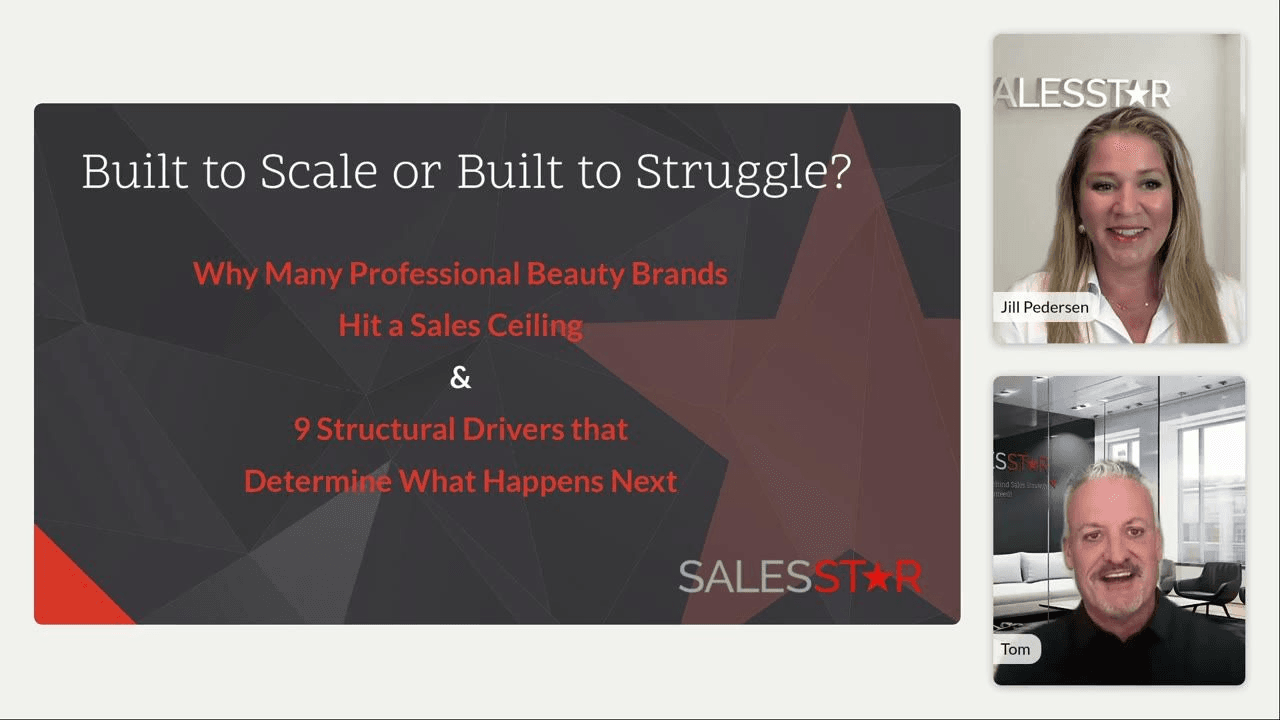
- Clarity, activity and effectiveness: the nine structural drivers, and why skills coaching sits at the top rather than the start
- How a water technology team went from reaching decision makers 23% of the time to 67%, unlocking $3 million in three months
What's covered
Inside the session. Watch a clip, then get the full recording.
Why some companies keep growing whatever the economy throws at them while others with equally strong products stall, and why so many brands obsess over product development with almost no structure around how they sell.
Treating symptoms instead of root causes. A long sales plan that goes in a drawer, and a process every rep describes differently. Managers promoted from within who spend their week firefighting.
An audience poll, and the answer from research: 60%. Your best rep became your manager, but nobody taught them to coach, run a pipeline review or develop their people, and that gap compounds every quarter.
Clarity times activity times effectiveness. A family-owned manufacturer with four reps and one manager grew revenue 11% in a year and lifted margin 16%, with no price increase and no new salespeople.
A true performance evaluation rather than a personality assessment, a strategic sales plan with a two-year goal and ideal client profile, and strategic messaging. Plus the Harvard Business Review finding of a 12-18% revenue lift from a milestone-centric process.
Leading indicators over lagging ones, real support for managers, a hiring process that can see through AI-written CVs, and then mindset, skillset and performance coaching once the foundation is built.
A technical water technology team in Chicago was reaching decision makers only 23% of the time. Fixing the sales process took that to 67% within three months and unlocked $3 million sitting in the pipeline.
Attendees score themselves against the nine drivers, then questions on why training alone fails, how long results take to show, and whether to upskill the team you have or start fresh.
Resources
Get the recording
Frequently asked questions
Common Questions
According to the session, sales training alone does not work: people take away and implement less than five percent of it, because nobody holds them accountable for embedding it. The change comes from implementation, which is why teaching needs to be followed by monthly coaching through to adoption.
It varies. The water technology client saw results in three months, while the manufacturer's margin gain took almost a year. As a rule of thumb from the session, the needle starts to move around three months, change shows at about five, and it reaches the bottom line around six. A nine-month sales cycle means roughly nine months before results hit the dollars.
Start with an objective, not subjective, evaluation of the team, and use data rather than instinct to decide. In most cases, Jill says, you can upskill the team you already have, and it costs five times more to hire a new person than to upskill your team.
The session cites research putting it at 60%. Managers are typically promoted from within because they were the top salespeople, then spend their time firefighting, so few are taught how to coach, run a pipeline review or develop their people.
Use the litmus test from the session: ask every sales rep or business development manager how they take a lead from start to close. If they would not all say the same thing, the process needs revisiting and making milestone-centric.
No. The presenters come from professional beauty, but they say the patterns apply to any business-to-business sales organisation, and the case studies include a manufacturer and a water technology company.
The next step
Stop running on heroics. Start engineering revenue.
Whichever way you work with us, the same proven Revenue OS runs underneath. Book a growth session and we’ll show you where to start.