
On-demand webinar
Busy sales teams, missing results: fix the plan, the process and the coaching
What you’ll learn :
- Why less than 20% of salespeople have the skills to sell effectively, and what that means for a team that looks busy
- How a position statement replaces product pitches with the prospect's problem, and the client who went from two new logos to eight
- Why skipping second base, from first conversation straight to a quote, leaves you selling on price
- What a good sales one-on-one covers: pipeline inspection, deal-specific coaching and resetting KPIs
Speaker :
Frank Niekamp
Chief Growth Officer · USA

David Mullins
Strategic Sales Coach · US
What's covered
Inside the session. Watch a clip, then get the full recording.
The three principles behind the session. With the right message, process and accountability in place, one client tripled discovery conversations with ideal clients within 45 days and almost doubled revenue in 24 months.
Research from Objective Management Group: less than 20% of salespeople have the skills to sell effectively, less than 15% of companies have a sales process, and 90% of sales managers have a critical weakness in leadership skills.
Most plans already hold activity goals and targets. The gaps are granular clarity on the ideal client profile, a go-to-market strategy built on the client's challenges and what good looks like, and the message that follows.
Salespeople default to talking about their company and product. The position statement flips that: target audience, emotional reaction, common problem. For John's team, it tripled meetings and took new client logos from two to eight in a year.
A Houston client had a beautiful laminated process, but reps could not name its steps. Research points to an average 19% revenue lift in the first year from implementing a process; that client reached 32%.
Using a baseball diamond, Dave shows what happens when reps jump from a first conversation straight to a quote: they can only sell on price. A consultative discovery meeting makes price secondary.
Why sales leaders skip one-on-ones, and why structured ones are proactive, turn knowledge into capability, and give a temperature check on each pipeline. A good agenda: pipeline inspection, deal-specific coaching, reset KPIs, and written actions.
Listen to what your team actually says to prospects, map your buyer journey as it is and as it should be, and invest in becoming great at one-on-ones.
Resources
Get the recording
Frequently asked questions
Common Questions
The session links it to three gaps: skills, process and coaching. Research cited from Objective Management Group found less than 20% of salespeople have the skills to sell effectively and less than 15% of companies have a sales process. Without a process there is nothing to measure, and without measurement leaders cannot coach to it.
An opening message built around the prospect rather than your product. It names the target audience by title, connects to an emotional reaction, and states a common problem you solve. The session's example: "I have been working closely with IT directors just like you who are concerned about the high cost of running outdated call systems."
Because skipping discovery leaves price as the only thing you can sell on, and if you win on price today you lose on price tomorrow. A consultative discovery meeting uncovers the prospect's pain points and their impact, so the proposal shows how they do better by working with you and price becomes secondary.
The session cites an average 19% revenue lift in the first year when companies successfully implement a process. Dave's Houston client, which refreshed its existing process and kept it in front of the team, saw 32% growth in its first year.
Beyond the human connection, at least three things: an inspection of the pipeline for balance and clogs, deal-specific coaching on opportunities that feel stuck, and resetting KPIs as skills and the calendar change. Frank adds writing down the specific actions the salesperson will take before you meet again, ideally within a week.
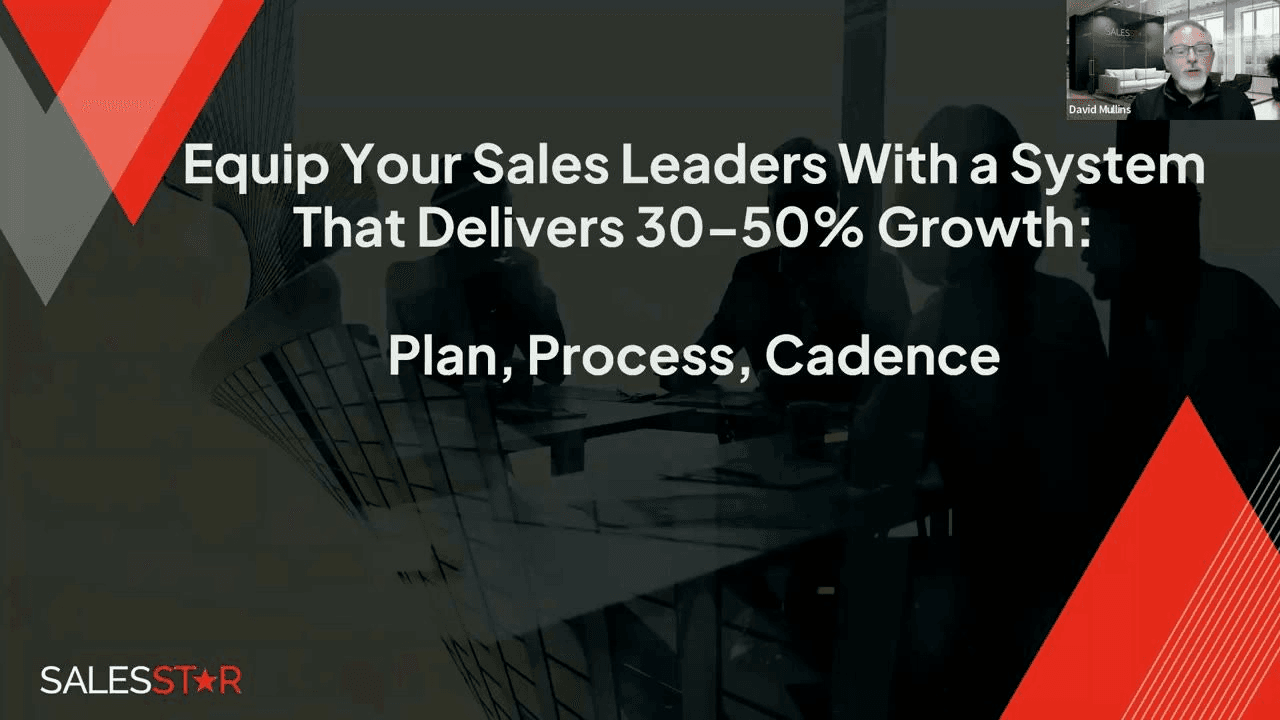
Frank frames the plan, process and coaching as a systemised approach to growing revenue 30 to 50%. The examples given in the session are SalesStar's average of 37% client growth within 12 months, a client that almost doubled revenue in 24 months, and a Houston client that grew 32% in its first year.
The next step
Stop running on heroics. Start engineering revenue.
Whichever way you work with us, the same proven Revenue OS runs underneath. Book a growth session and we’ll show you where to start.